Biography
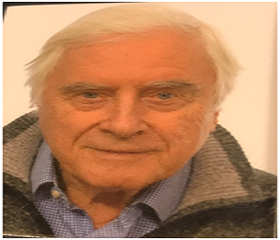
Peter H. Handel studied general relativity from Hermann Weyl's book. He received his MS degrees in atomic (nuclear) and theoretical physics in 1959and his PhD in solid-state theory in 1965, both from the University of Bucharest. From 1960 to 1967 he was a research scientist at the Institute of Physics of the Romanian Academy. In 1967-69 he was a research scientist at the Max V. Laue-Paul Langevin Institute in Munich, Germany, appointed by Heisenberg. He has been a Professor of Physics at the University of Missouri, St. Louis since 1969, emeritus since 2012. He introduced the turbulence theory of 1/f noise in 1965, the quantum theory of 1/f noise in 1975, the coherent quantum 1/f effect in 1982, defining a fundamental new aspect of quantum mechanics, the time domain infrared divergence effect of 1/f quantum fluctuations in physical cross sections and process rates. Since 1975 Dr. Handel developed the maser-soliton theory of ball lightning. In 1981 he developed a polarization-catastrophe theory of atmospheric electricity. He has also made contributions to solid-state, plasma and electronic noise theory. His simple universal coherent and conventional quantum 1/f effect formulas allow for the ultra-low noise and phase noise close to carrier optimization of most electronic devices, almost all high-technology materials, systems and devices, resonators, clocks, MEMS, particularly useful in nanotechnology. Dr. Handel has been organizer and Chairman of van der Ziel's Quantum 1/f Symposia 1990-2004. He is also a founding member of the Center for Molecular Electronics of the University of Missouri at St. Louis. He was a member of the 2001-2006 Ultra-low Phase Noise MURI at UCSB. Details, awards, are at www.umsl.edu/~handel. Recently he solved the 90 years old "Dark Matter in the universe" problem and the 23 year old Dark Energy puzzle, both with his partner K.E. Splett, P. H. Handel and K. E. Splett, "Calculation of Dark Matter as a feature of Space-Time", Springer Nature journal "Foundations of Physics," 2023, DOI 10.1007/s10701-023-00705-x, Open Access and a companion paper submitted to Nature.
Biography
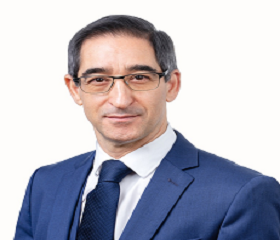
Professor M. Moatamedi is a globally recognized leader in industrial engineering and multiphysics research. He is the President of The International Society of Multiphysics. His academic background includes a Ph.D. in Engineering from the University of Sheffield, an MBA from Manchester Business School, and an LLM in International Business Law from the University of Leeds. Throughout his distinguished career, Professor Moatamedi has held senior academic and leadership positions at esteemed institutions such as New York University, Imperial College London, Cranfield University, the Arctic University of Norway, and the University of Salford. His expertise spans multiphysics modelling, simulation, and engineering design, with significant contributions to both academia and industry. As Conference Chair, Professor Moatamedi brings a wealth of experience and a commitment to fostering innovation and collaboration in the conference.
Biography
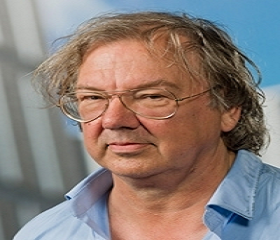
Theo is bachelors educated in Physics, Chemistry, Mathematics from Leiden University. He has a Masters in Experimental physical chemistry, and a PhD in Chemistry. He has held a full Professorship at Delft University of Technology (Chemical Engineering and Materials Science, 1987 – 1999 and Kluyver Laboratory of Biotechnology, 1999 – 2013). He has also held adjunct Professorships at Leiden University (LUF, 1999 – 2006, and, Leiden Institute of Chemistry, 2006 – 2009). Currently Theo is Guest professor, Lorentz Institute for Theoretical Physics, Leiden University, and an Honorary Research Associate, Genetics, University of Madison, Wisconsin. He is also a Visiting Professor, Johannes Gutenberg University, Mainz, and a Member of the Royal Dutch Academy of Sciences (KNAW).
Biography
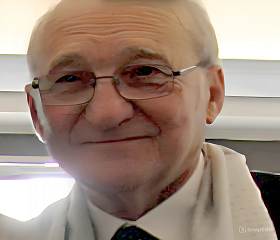
Luciano Lorenzi was born in Ventimiglia (Imperia, Italy) on 16 October 1949. He studied in Mondovi in the 1960s and took his degree in Physics in 1975, with the assistance of the Astronomer Prof. Franco Scaltriti, having already been involved in research at the Turin Astronomical Observatory for three years. Lorenzi earned the title of Astronomer in 1978 through a national selection, followed by another appointment again in Turin, where he remained until 1 September 1987. At his own request, on the same date he joined High Schools in the Province of Cuneo to teach Physics. From 21 December 1989 until early 1992, Lorenzi coordinated and supported the Mondovi Astronomy Study Center, together with the two OATO Directors, Professors Alberto Masani & Attilio Ferrari. Its goals included a variety of cultural objectives focusing on research, teaching and communication, with the clear intention of promoting the city as the heir to an ancient university institution, as well as the birthplace of the founder of the Turin Astronomical Observatory, Father Giovanni Battista Beccaria. He was also a Senator of the Italian Republic for three consecutive legislatures from 1992 to 2001. In the same period, from 1994 to 1999, he was a member of the "Council of Europe" and the "Western European Union Assembly". He was an active parliamentarian in the Senate of the Italian Republic and the "Council of Europe". In particular, he promoted Law 315 dated 3 August 1998, which allocated 8.1 billion lire for university building projects in Mondovi through Turin Polytechnic University. He was also instrumental in achieving approval of "RESOLUTION 1080 (1996) on the detection of asteroids and comets potentially dangerous to humankind" by the "PARLIAMENTARY ASSEMBLY OF THE COUNCIL OF EUROPE". He today has almost eighty publications or conference papers in various scientific fields, dealing specifically with Astronomy, Variable Star Astronomy, Large-Scale Structure of the Universe, Cosmology and Cosmogony. In particular, Lorenzi proposed The Expansion Center Model (ECM) of the experimentally checked Rotating & Expanding Universe (REU) (cf. the address https://www.researchgate.net/profile/Luciano-Lorenzi ).
Biography
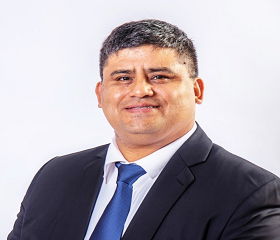
Dr. Edgar Ricardo Quiroz Villón is a senior mining executive, civil engineer, and specialist in tailings management, water resources, geotechnical engineering, ESG governance, and digital transformation. With more than 25 years of experience in major mining projects and operations in Latin America, Canadá and Australia. He’s Executive Chairman & CEO of Frame Limited, a bootique consulting company focused on mining engineering, tailings governance, risk management, ESG, and applied innovation. His expertise includes the integration of artificial intelligence, machine learning, digital twins, predictive analytics, remote monitoring, and autonomous technologies to improve the safety and performance of tailings storage facilities and critical mining infrastructure. His current work focuses on Al-powered risk management, Mine-to-Tailings digital transformation, predictive monitoring systems, and the application of robotics and machine learning for safer and more sustainable mining operations.
Biography
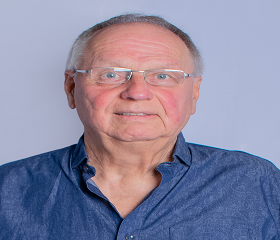
James M. McCanney, M.S., is an independent researcher, scientist, and entrepreneur with extensive experience in applied science, engineering concepts, and interdisciplinary research. As the owner of JMCCanneyscience® LLC and JMCC WING® LLC, he has dedicated his career to advancing innovative scientific ideas and developing practical applications across multiple domains. Professor McCanney is widely recognized for his analytical approach to complex scientific phenomena and his commitment to independent research. His work spans various fields, where he has contributed insights through research publications, technical discussions, and public engagements. During his 50 year career he has taught university level Physics, Mathematics, Computer Science and Astronomy and spent over 25 years as a principal engineer in the telecommunications industry specializing in telecommunications protocols, security and encryption. In addition to his research and business leadership, Professor McCanney is an active speaker and media contributor, frequently appearing on television and radio programs to share his expertise and perspectives on scientific developments and emerging technologies. His ability to communicate complex concepts in an accessible manner has made him a respected voice among diverse audiences. Through his continued efforts, Professor McCanney remains committed to exploring innovative solutions and contributing to the broader scientific and educational community.
Biography
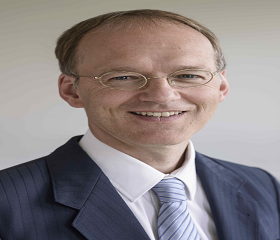
Physics is my passion. To understand how galaxies, stars and planets have formed from coulds of primordial hydrogen, and to comprehend how billions of years of evolution have led to today's civilization, reamins utterly fascinating for me. Thus the search for the ultimate laws of nature in physis and cosmology continuously accompanies me. Pursuing these matters led me to hold physicists such as Einstein, Schrödinger and Dirac in high respect, because those founding fathers of modern physics have been researching in all fundamental fields, from cosmology to particle physics. Indeed, there are many unknown gems in their papers, while a lot of problems they have named remained unsolved to this day. In my life, I have always tried to deepen my knowledge without narrowing it, and what I have learned in law, and neuroscience and as a teacher helps me to understand physics as a whole. In particular, dealing with the history, methodology and philosophy of science led me to scrutinize the current standard models of physics and to challenge their validity, and to point out some obvious aberrations. My book was given the “Science book of the year” award by the German science journal "Bild der Wissenschaft“ , and its English edition “Bankrupting Physics - How Today’s Top Scientists Gambled Away Their Credibility” was published by Palgrave Macmillan. Another very controversial book was "The Higgs Fake – How Particle Physicists Fooled the Nobel Committee". My biggest source of motivation are book about and by physicists of past times, such as Ernst Mach, Albert Einstein, Erwin Schrödinger, Werner Heisenberg, Paul Dirac, Robert Dicke und Richard Feynman. Recently, I’ve been impressed by books of Nassim Taleb, Daniel Kahnemann, Nick Bostrom and Jean Ziegler. I am happy and grateful for the privilege to dedicate a significant part of my life to science. I think that freedom and peace, which can be found in this country more than elsewhere, cannot be taken for granted and require our care - and in this respect, particular attention is needed for the information that we get from the media. I’d be happy if you follow my views about physics and other matters on twitter or facebook. Apart from physics, my recreational activities are hiking, jogging, playing chess and the piano, and having fun with my family. We all can just hope to contribute a little to the respect humankind may get from future civilizations.
Biography
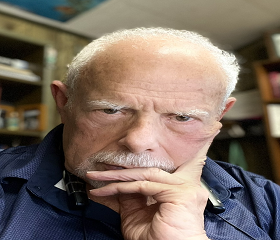
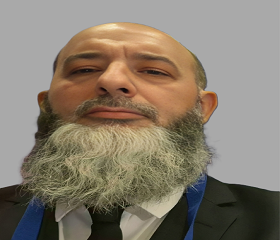
Prof. Gideon Samid, PhD, pioneered Innovation Science: the organized innovation-relevant knowledge, apart from subject matter expertise. After years of extensive scientific innovation in large places like NASA and Exxon, and running specialized innovation consultancy, Gideon returned to his alma mater, the Technion - Israel Institute of Technology where he developed his PhD dissertation: accelerating innovation through a regimented exploitation of creativity outburst. Having proven the efficacy of Innovation Science, Prof. Samid augmented his product through artificial intelligence, AI. See book: "AI Assisted Innovation". His innovation methodology InnovationSP.net led to abstraction of geometry, space, and mathematical formalism, which in turn led to the unsettling realization that humans sense and consider reality using their Darwinian brain that was shaped by evolution to maximize survival, not to comprehend reality in full. The prospects of unbound parts of reality being invisible to us is tantalizing. (Related to the question of extraterrestrials). Can we overcome this blindness? It is worth a try. Gideon Samid is now applying the full force of AI to see cosmology beyond the limitations of our Darwinian brain.
Biography
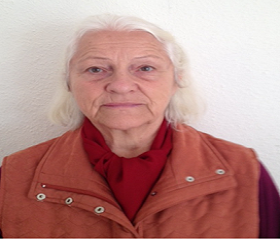
My background spans scientific research and education, supported by robust academic credentials. I am passionate about topics such as computer science, cosmology, astrophysics, cyberspace, and cryptography. By founding Capricorne Spatial Agence and its brand Quantum Launch, I've developed innovative scientific solutions and played a role in advancing the New Space Age.
Biography
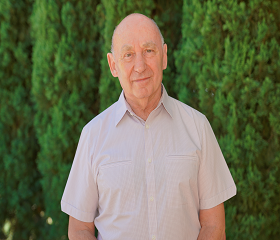
Dipl. Ing. Klara Erika Splett received her ME in Engineering from the German Transportation Technology Institute in Gotha, Saxony, Germany, in 1980. She was a Sr. mining railway engineer, at Welzow and Bitterfeld mines till 1983, railway technology lecturer for railway economics students till 1992, lector of public administration law atVocational College of Saxony-Anhalt in Bitterfeld, Germany till 2004, In 2017-2022 she was Visiting International Scholar in the Department of Physics and Astronomy, St. Louis, USA. She is in the Handel research group till present time. Erika Splett participated in several international conferences and published, in collaboration, papers on quantum 1/f engineering formulas and applications, as a new universal, practical aspect of Quantum Mechanics. The same way she published on the gravidynamic quantum 1/f noise, on the maser-soliton theory of ball lightning and AUPs (UFOs) and on the "Calculation of Dark Matter as a Feature of Space-Time;"DOI 10.1007/s10701-023-00705-x. She presented a paper "Derivation of Dark Matter, the Cosmological Constant and Dark Energy as a Feature of Space-Time" with P. Handel at the 2024 Annual Meeting of the APS.
USA
Biography
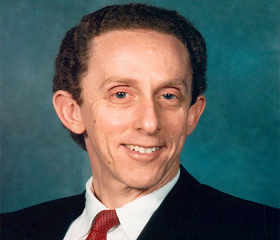
Felix Lev graduated from the Moscow Institute for Physics and Technology, got PhD from the Institute of Theoretical and Experimental Physics in Moscow and Dr. Sci. degree in physics and mathematics from High Energy Physics also known as the Serpukhov Accelerator. In Russia he worked as a mathematician at the Far Eastern Branch of the Russian Academy of Sciences and as a nuclear physicist at the Joint Institute for Nuclear Research (Dubna, Moscow region). From 1999 to 2024 he worked on mathematical algorithms for the semiconductor industry at a software company in the Los Angeles area. His major research interests are in quantum theory over finite rings or fields, in particle theory and cosmology. In 1987, the Presidium of the Academy of Sciences of the USSR awarded him the title of senior scientist in theoretical and mathematical physics. In 1988 Joint institute for Nuclear Research (JINR) (Dubna, Moscow region) published his course of lectures for young scientists of JINR: "Problems of Relativistic Quantum Mechanics of Systems with a Fixed Number of Degrees of Freedom", P4-88-829. In 2020 Springer published his book "Finite Mathematics as the Foundation of Classical Mathematics and Quantum Theory. With Applications to Gravity and Particle Theory". Also, he has more than 100 publications in leading journals. The main results of his publications are: ● It has been proved that standard mathematics is a special degenerate case of finite mathematics in the formal limit p→∞ where p is the characteristic of the ring or field in finite mathematics. ● It has been proved that standard quantum theory is a special degenerate case of a quantum theory based on finite mathematics in the formal limit p→∞ where p is the characteristic of the ring or field in finite mathematics. This implies that mathematics describing nature at the most fundamental level involves only a finite number of numbers while the notions of limit, infinitesimals and continuity are needed only in calculations describing nature approximately. ● In a quantum theory based on finite mathematics, the de Sitter gravitational constant depends on p and disappears in the formal limit p→∞, i.e., gravity is a consequence of finiteness of nature. ● The application to particle theory gives that particle-antiparticle is only an approximate concept valid in special situations. As a consequence, the electric charge and the baryon and lepton quantum numbers can be only approximately conserved, and the baryon asymmetry of the universe problem does not arise. ● The phenomenon of cosmological acceleration (PCA) has a clear explanation without uncertainties as a kinematical effect in semiclassical approximation to quantum theory. In particular, it is not necessary to involve dark energy, the physical meaning of which is a mystery. In our approach, background space and its geometry are not used and the results for PCA are the same as in General Relativity if Λ=3/R2, where R is the contraction parameter from the de Sitter to the Poincare algebra and has nothing to do with the radius of background space. Therefore Λ>0 and there is no freedom in choosing the value of Λ.
Biography
Dr. Thomas J. Buckholtz has made contributions to society that span aspects of research and development, business, government, education, information technology and IT business practices, not- for-profit endeavors, startup enterprises, and the environment. He does research in (1) cosmology and elementary particle physics and (2) innovation, leadership, skills development, and thinking. Regarding (1), his 2024 Journal of High Energy Physics, Gravitation and Cosmology paper & quot; Characterizations That Help Explain Particle and Cosmic Data & quot does the following: (A) Catalog all known elementary particles and suggest new elementary particles; (B) Suggest a well-defined specification for dark matter. (C) Explain observed ratios of dark-matter effects to ordinary-matter effects; (D) Suggest how to close gaps, between models and data, regarding the rate of expansion of the universe; and (E) Suggest new insight about galaxy formation. The paper also suggests new solutions for multidimensional isotropic harmonic oscillator equations. Thereby, the paper provides possibly useful perspective about the following: (a) Vacuum energy and (b) Gauge symmetries and the Higgs mechanism. His background for (1) includes a mathematics BS from Caltech, a physics PhD from Berkeley, and work as a physicist {including for the Lawrence Livermore National Laboratory}. His background for (2) includes catalyzing a grassroots innovation program throughout an energy utility and serving as a U.S. General Services Administration commissioner {including leading a $1-billionbusiness unit, serving as co-chief information officer for the U.S. federal government's Executive Branch, and leading efforts that catalyzed a nationwide grassroots movement that laid USA groundwork for "e-government". He lives in Portola Valley, a town in the Silicon Valley region of California, USA.
Biography
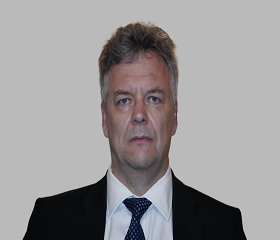
Professor Dr Maxim G. Ponomarev, CEO, Director, Founder Cambridge Research and Consultancy was born on January 24, 1968. He is famous plasma scientist included in the Wikipedia List of plasma physicists. He published more than 52 research papers regarding novel physical methods.
Biography
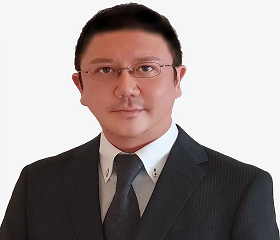
Kong Chu Hai College. He has previously served as a Professor at BASIS, Jiangxi Normal University, and Huanghuai University. He holds a BSc (Hons) degree in Computing Systems and a PhD in AI from Nottingham Trent University (NTU), UK. Between 2001 and 2016, he was the Senior Programme Director at The University of Hong Kong (HKU-SPACE). He currently serves as a Research Supervisor for PhD/Master students at the Southern Institute of Technology (New Zealand). His research interests include AI, Quantum Computing, Web3 Technology, and Big Data Analytics. Throughout his career as a researcher, he has worked with various programming languages, including Python, Rust, R, Java, JavaScript, C++, PHP and SQL. Prior to moving into the field of education, Prof. WONG (Eric) worked as an AI consultant at Hewlett-Packard (HP) and Unisys. He has served on more than 1,500 top-tier International Conference Chairs, Scientific/Publicity Chairs and Program/Technical Committees. Since2016, he has actively participated in 16 International Journals as Editor-in-Chief, Associate Editor, and Member of the Journal Editorial Board Committee. He is currently a Fellow, Professional and Individual member of 12 Internationally renowned Professional Organizations (IEEE, ACM, AAAI, IIBA, ISACA, AIP, BCS, IOA, ACL, CAIAC, AAIA and ICAIL). During his career, he has held the titles of Honorary Professor, Distinguished Professor, Adjunct Professor, Visiting Professor and Honorary Research Fellow at 14 different universities and institutions. From 1996 to present, he has published more than 180 peer-reviewed articles & research papers in top-tier academic journals, conference proceedings, and online R&D outlets. Many of his research papers have appeared in world-renowned journals such as Scientific Reports, Springer Nature and IEEE. He has supervised/co-supervised over 80 PhD/Master students

Biography
Dr. Regnault Umaru Bamiji, DFIICEST, PhD is the Chairman and Chief Engineer of Glyms Industries Ltd. He is an aerospace engineer, inventor, and technologist with a strong background in astronomy and rocket science, having studied at the University of Arizona and the University of Michigan. A former military officer and FAA-certified commercial drone and helicopter pilot, Dr. Bamiji has independently developed multiple innovations, including a jet helicopter, jet engine, gyroplane, and advanced self-charging power systems. His work has earned recognition from the Nigerian Civil Aviation Authority for pioneering locally built aircraft. He has been involved with the Nigerian Space Agency (NASRDA) in rocketry research and is affiliated with leading international professional bodies, including the Aircraft Owners and Pilots Association (USA) and the American Institute of Aeronautics & Astronautics. Dr. Bamiji is also a founding partner of Odyssey Energy LLC (USA)